


Today, let’s talk about permanent makeup removal.
Unfortunately, the demand for this service hasn’t decreased over the years…
Currently, there are two reliable methods for removing permanent makeup:
– Laser removal, performed with an Nd YAG Q-switch laser
– Remover-based removal
⠀
Since this is a broad topic, I’ll break it down into several posts.
⠀
Let’s start with laser removal.
⠀
Laser removal works by directing a light beam of a specific wavelength through a lens, which is then absorbed by pigment molecules. This causes the pigment to break down into smaller particles. Some of these particles are carried away by the lymphatic system and gradually eliminated from the skin. This is how the pigment is removed in stages.
⠀
Key features of the procedure:
⠀
– The laser targets only the pigment, so the skin and hair follicles remain unharmed (when the device is used properly ☝).
⠀
– The removal procedure takes about 5 minutes.
⠀
– It can be quite painful, even with anesthesia.
⠀
– Redness may occur after the procedure, usually subsiding within 2 hours.
⠀
– Swelling is possible and may last up to 3 days.
⠀
– The recovery period is up to 3 days if swelling occurs. Itching and mild flaking may appear within a week, but this is rare.
⠀
– Some pigment shades, such as white or green, are difficult to remove with a laser.
⠀
– Red or pink pigments may turn gray or brown after laser exposure. This can be an advantage for brows, but a disadvantage for lips.
⠀
– The recommended interval between sessions is 30 to 60 days.
⠀
Overall, I believe this is the most effective and safest method for removing permanent makeup and tattoos.
Of course, always remember that any procedure should be performed by a qualified specialist! Otherwise, burns and scars are possible…
⠀
Now, let’s discuss remover-based removal…
⠀
Remover-based removal involves introducing a special solution into the skin using a permanent makeup device. This solution chemically interacts with the pigment molecules, breaking them down so they can be eliminated by the lymphatic system.
Removers vary in composition—some are acidic, others alkaline. Each type has its own application techniques and healing characteristics.
When it comes to effectiveness, alkaline removers have proven to be the most reliable in my experience.
⠀
Key features of the procedure (alkaline remover):
⠀
– The procedure is traumatic and disrupts the skin’s integrity.
⠀
– It takes about 1 hour.
⠀
– It is painful.
⠀
– After the procedure, redness, swelling, and scabbing will occur. These scabs are larger and tougher than those after permanent makeup (which are usually mild flaking). It’s crucial not to soak or pick at them.
⠀
– Because this method is highly traumatic, there is a risk of scars, so it should only be performed by a professional who has been properly trained by the manufacturer’s representative ☝
⠀
– The recovery period is 10–15 days, which is how long it takes for the scabs to fall off. Full skin recovery takes 1–2 months (if the procedure is done correctly).
⠀
– Removers work on pigments of any color, and do not cause color inversion (for example, red turning gray or white turning green, as can happen with laser removal). The pigment simply lightens.
⠀
– The recommended interval between sessions is from 2 months to half a year.
⠀
In summary, remover-based removal is effective but more traumatic, and requires a highly qualified specialist.
⠀
Now, all that’s left is to compare which method is better: laser removal or remover-based removal…

So, which is better and more effective… laser removal or remover removal?
⠀
In my opinion, the answer is clear. Each of these removal methods has its own area of responsibility.
⠀
Laser removal is safe and effective for removing permanent makeup from eyebrows, eyelids, and tattoos. However, using it on the lips can be risky due to the possibility of color inversion—that is, the shade may change from red to gray.
⠀
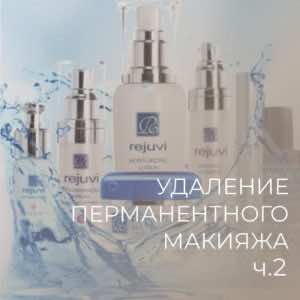
That’s where removers come in. Yes, the process is more traumatic and takes longer to heal, but it works effectively and avoids the risk of color inversion. There are many removers available on the market, but not all are effective. I personally prefer Rejuvi. I highly recommend it, but only after proper training!
⠀
Removers are also the best choice when laser removal is no longer effective. Sometimes, pigment molecules become so small that the laser simply “can’t see” them.
⠀
Colored pigments (orange, green, white, blue, etc.), which are difficult to remove with a laser, can be effectively removed with a remover.
⠀
In both cases (laser and remover), removal is a gradual process. Don’t expect that just because a remover is so effective, you can go through one round of scabbing and your skin will be completely clear. Unfortunately, there are no miracles—nothing is removed in just one session. Of course, there are rare cases (with both laser and remover), but they are exceptions.
⠀
Many people come to me asking to remove old permanent makeup with a remover. But someone without experience in this area shouldn’t decide which removal method to choose. That’s MY prerogative.
⠀
So, if you have any questions, come in for a consultation—I’ll explain and show you everything.
⠀
Wishing you all beauty!